Why the format works
Service businesses spend a lot of time describing what they do. Before and after ads skip the description and go straight to the result. Two images, clear labeling, and the viewer's imagination fills in the rest. The cognitive work required is minimal. The persuasive payload is high.
There is also a trust dimension. A specific, real result is harder to dismiss than a general claim. "We make your teeth whiter" is easy to ignore. A photograph of an actual whitening result is evidence. The viewer can evaluate it themselves.
Which verticals it works best for
Before and after is most effective where the outcome of the service is visually apparent:
- Dental — Whitening, veneers, Invisalign, and orthodontic cases all have clear visible outcomes. The smile before and after is the most direct proof a dental practice can offer. It works for cosmetic procedures where the patient chose elective treatment, and for restorative work where the improvement is unmistakable.
- Med spa — Skin treatments, Botox, filler, chemical peels, and laser treatments produce results that photograph well. Before and after has long been the primary content format for aesthetic medicine because the results are so visual.
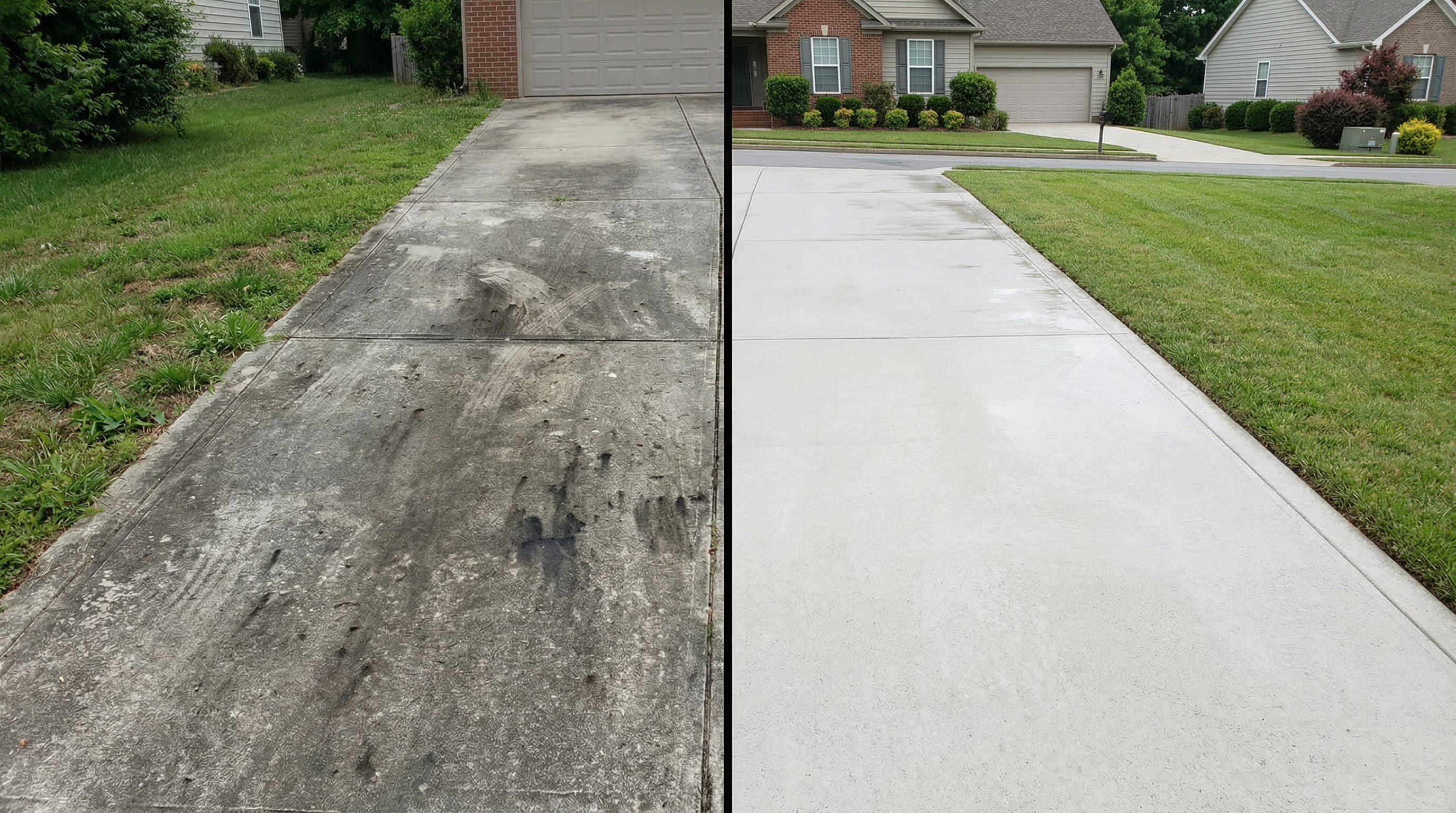
- Home services — Power washing, landscaping, and restoration all produce dramatic before and after imagery. A driveway or deck before and after pressure washing, a neglected yard before and after landscaping — these images have inherent visual tension that makes them interesting.
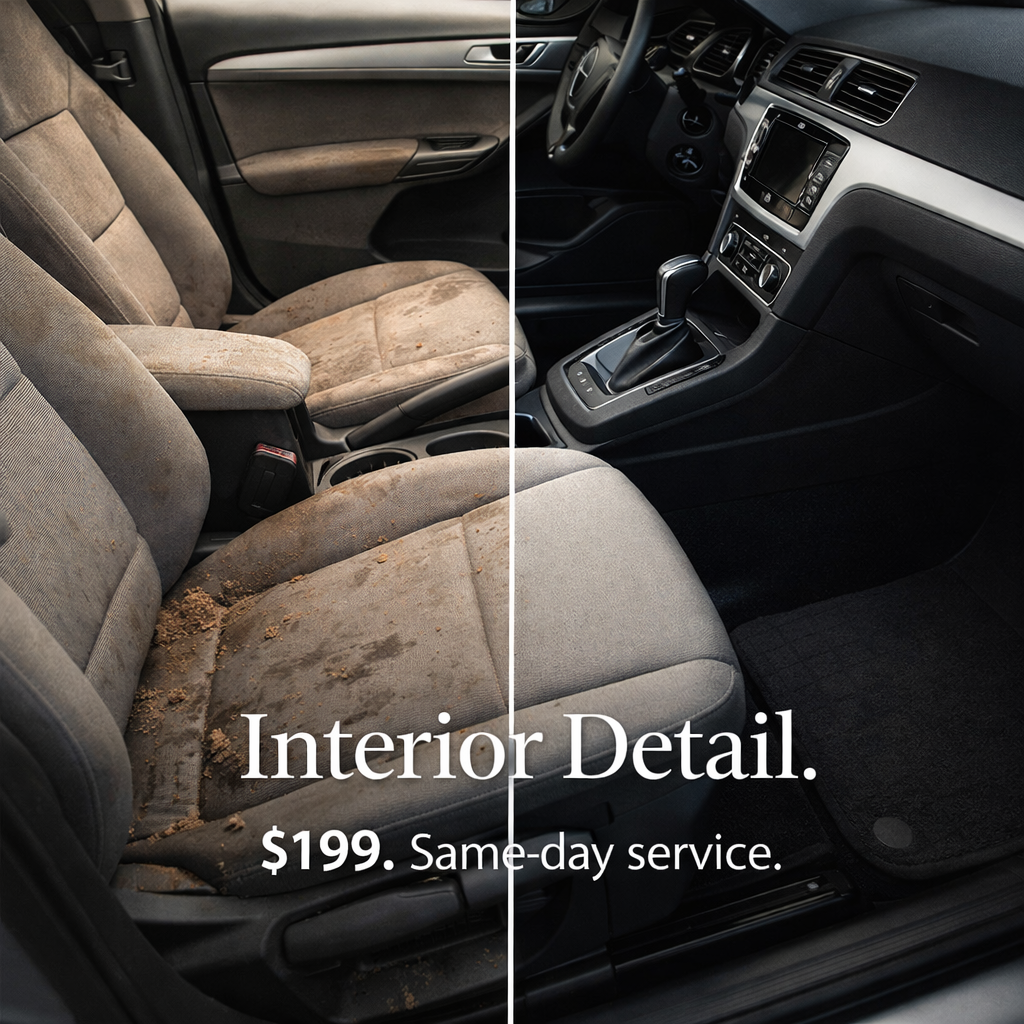
- Auto detailing — Interior and exterior detailing results photograph well, particularly paint correction and ceramic coating work.
The format works less well for services where the result is not visual: accounting, insurance, legal. Those verticals need different approaches.
What makes a strong before and after ad
The quality of a before and after ad depends almost entirely on the quality of the before and after images. A few things that separate strong from weak:
- Consistent framing — The same angle, similar lighting, similar distance from the subject. If the before is a close-up and the after is pulled back, the comparison reads as manipulated even if it isn't.
- Clear labels — "Before" and "After" should be obvious and readable at feed size. Subtle labels get missed on mobile.
- A dramatic difference — Small improvements don't make good before/after ads. The gap between the two states needs to be visible and significant at a glance.
- One transformation per ad — Before and after ads that try to show multiple services or multiple results lose focus. One clear transformation per ad.
The strongest before/after ads for home services show the difference as close to 50/50 in the frame as possible. A diagonal split often works better than a simple left/right division for making the contrast visible at small sizes.
Meta's advertising policies on before and after
Meta prohibits before and after images in ads for certain categories, including weight loss and body image ads, when the images could be considered disparaging or misleading.1 For the verticals where before/after is most common in local business advertising — dental, med spa, and home services — the format is generally permitted when used honestly.
The key requirements are:
- Do not artificially enhance the "before" to look worse than it was (adding blemishes, manipulating lighting to deepen shadows)
- Do not artificially enhance the "after" beyond what the service actually produced (heavy retouching, extreme color grading)
- Do not imply the result is typical if it is an exceptional outcome
- Results disclaimers ("Individual results may vary") are standard practice and reduce policy risk for medical aesthetics
For dental and home services, where the results are structural and photographic rather than personal appearance, the policy requirements are less stringent. A clean driveway is a clean driveway.
Format variations
The split-frame is the most common before/after layout, but it is not the only one that works:
- Side-by-side split — Before on the left, after on the right. The classic. Works well in 1:1 and 16:9 formats.
- Diagonal split — A diagonal line divides the frame. Creates more visual energy and can make the contrast appear more dramatic.
- Sequential frames — Before in one frame, after in the next. Works well in carousel format. Allows for more context in each image.
- Overlay label — A single "after" image with a small inset of the "before" in the corner. Works when the "after" is the stronger visual and you want to lead with it.
Rotating before/after creative
Before and after is a strong format, but audiences can fatigue on it like any other. Rotating between different before/after pairs — different subjects, different treatments, different services — keeps the format fresh while maintaining its persuasive structure.
For a dental practice, that might mean alternating between a whitening before/after, a veneer case, and an Invisalign result. Each is a different visual and a different patient story. The format is the same, but the specific proof changes with each rotation.
Before and after ad creative for your business
AI Sidekick produces before/after concepts across dental, med spa, home services, and more. Five concepts, 48-hour turnaround, free for your first batch.
Get your free samplesSources
- Meta Advertising Policies: Prohibited content and restricted content — personal attributes and before/after imagery